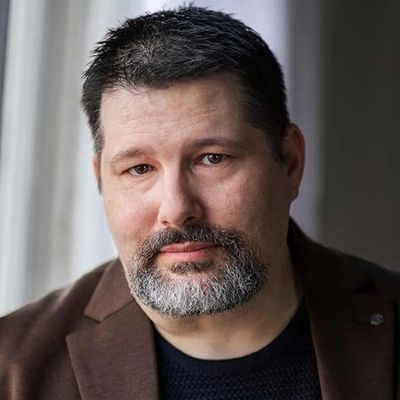
Take 5 With The Authors
Maynard Blackoak
JP: What drew you to writing?
MB: I was taking creative writing my junior year of HS. My teacher encouraged me to submit a story for a publication of HS students. It was accepted. She encouraged me to pursue writing. I wasn't interested then, but many years later I picked it up again as a hobby. A publisher read some of my stories and really liked them. After that, I started writing seriously.
JP: Your collection Quoth the Raven Once More is an absolutely wonderful tribute to the master. How long have you been a fan of Edgar Allen Poe?
MB: I've loved Poe's writing since I was a kid. It started with watching the old movies based on his stories with my mama. It sort of grew from there. The inspiration for my humble tribute came to me during a long bout with insomnia. I added a little absinthe to the mixture and some really strange stories came out.
JP: Tell us about your other works.
MB: Over the years, I've written several short stories that appeared in different anthologies. To be honest, I don't remember the story or anthology titles. Then there was my Eerie Trails of the Wild Weird West. I'm pretty sure that one appeared on the NYT worst seller list. To date my Poe tribute and one short story are the only ones still available.
JP: What is a perfect day for you?
MB: Perfect day starts before dawn with a cup of very strong black coffee, followed by a nice breakfast. Once the sun starts peeking over the horizon, it's time to go outside to tend to livestock. Hearing cattle bawling first thing in the morning is music to my ears.
JP: Everybody here has a “real” life. Any plans for the future?
MB: Right now, I'm taking the winter off from hogs and cattle. Busting ice and hauling five gallon buckets of water from the house to water troughs gets hard after doing it multiple times a day for a few days. Come spring, I'll be getting more calves and piglets to raise for slaughter. Meanwhile, there's lots of fencing and a load chute needing repairs. Plus, I'll have meat birds (ducks and chickens) by then as well. All that to go with laying hens and ducks for eggs. Aside from cattle, I mill my own feed for all my critters. I'm hoping to have the funds to buy a larger feed mill and incubator. As for writing there's a shootist redemption novel I started several years ago I plan to finish over the winter.

Jeffrey Kosh
JP: What drew you to writing?
JK: My first attempt at writing was when I was nine. Before that I’d been reading only comics. Many adults around me had suggested starting reading novels, but I shunned them because to me books were boring as I associated them with school. I preferred watching movies. My aunt – that likes to read every genre – told me that many of the horror movies I liked were based on novels and that often the books contained much more information about what I saw on screen. She asked me what was my favorite movie. I said Jaws. She gave me the name of the author and I went looking for it. I only found a used copy of Jaws 2 by Hank Searls. Now, at that time I had not watched the sequel, so it was a great opportunity to start. After that, I read Benchley’s Jaws. Then I tackled Frankenstein. And my, oh my, if I was in for a shock. The book was totally different from the Karloff’s movies and so much much better. Then came Dracula, The Strange Case of Doctor Jekyll and Mr. Hyde, The Phantom of the Opera, and many classics that had been transported on the silver screen. And so I started dreaming. I could do that too, I could create my own ‘mind-movies.’
My first attempt was terrible, of course. I never published it, nor submitted it anywhere. My closest friends read it. They laughed all the time as it was involuntarily comical – especially the death of an old man in his bathroom caused by a slippery floor, a cat, and an electrical radio, this one was perfect for a Monty Python sketch.
I never repeated the experiment and for years I just concentrated on reading.
Then, I discovered role-playing games and I became a Dungeon Master. And a DM is a referee, director, screenwriter, and actor at the same time. I wrote many adventures for my players. Time passed and thanks to social media I discovered people that were like me, that liked to tell stories. I decided to give it a try and started writing a novel called Dark Riders. I had a friendly editor have a look at the first three chapters and she convinced me to keep going. After one year I still hadn’t finished; I kept postponing publication. I submitted it everywhere (mostly to Singaporean and Malaysian presses as I was living in Thailand at that time) until it was a small American press that picked it up, the now defunct Alexandria Publishing Group. It came out as Feeding the Urge. The book was quite successful but I was never happy with the final result. In fact, years later, when Optimus Maximus Publishing offered me a contract to republish it I asked them if I could make some revisions and change the ending. It became Feeding the Urge Remastered, the better and definitive edition of what I really had in mind. After that I wrote many shorts set in the fictional town of Prosperity Glades, then my second novel Dead Men Tell No Tales, and some of my short stories began to be accepted in larger presses offering me the opportunity to share space with successful authors. And that’s it; I’m still not making a living out of my writing but I haven’t quitted.
JP: Your novel Beyond Frankenstein is an epic trip into the Frankenstein world. Tell us how you came to attack this classic theme.
JK: Ah... now that’s a story within the story. My favorite book is Mary Shelley’s Frankenstein and when I was a kid – before I read the novel – the Universal Pictures’ Frankenstein Monster was one of my favorite characters. Since that time I have watched almost everything about Frankenstein but my approach to the myth behind it has changed. While in the past I was totally obsessed with the creature now I’m much more in love with the concept of unregulated science. But that’s for another time.
As you know, I’m a graphic artist with many of my covers wrapping so many books out there that I can’t remember. Up to two years ago, before the advent of ubiquitous AI made it inconvenient, I used to create pre-made covers and show them on social media to sell or simply to showcase my skills. One of these was a The Legacy of Frankenstein, a piece of art made in the style of old 1930s/1940s horror movies. Franklin E. Wales loved it and got inspired to write a novel that would bridge the events between ‘Bride of...” and “Son of...” He wrote it and then asked me to write an introduction to his book. Now, because of personal problems I had not written anything for years (the last being the novelette Bloody Bones available in a Christmas horror anthology), and when I set down to write this foreword I found myself transported into this black and white world full of unexplored potential. I ended up writing a fictional account of my trip to Backlot Mitteleuropa and you can read it in Frank’s book. My partner (who’s also my strict editor) loved it and said, “You should go back writing Gothic stories as you really have a knack for the old times.”
I meant to write a short, tongue-in-cheek Frankenstein story connected to the events of Frank’s book. But... because I’m a visual artist and I created the map of the Barony of Frankenstein and many vignettes for Frank’s book, I ended up creating the whole fictional country of Wissenheim and its inhabitants. The book swelled, it became 1000 pages long.
And it’s my favorite one, too. To the point that I decided to have a whole series set in this fictional 1920s Mitteleuropean country, with recurring characters (such as Dr. Richter and Dr. Meyer), conspiracies behind the science experiments, and real historical facts mixed with the fiction.
I’m well into book two, but, as per my tradition, I will not talk about it until it’s done.
JP: Tell us about your other works
JK: Let’s start with FEEDING THE URGE. It’s a mix of true crime and supernatural. Spirits are drawn to ‘attuned’ individuals and urge them to feed them with the same emotions they are made of. Mostly based on Cherokee traditions, it follows the personal ‘mind journal’ of Axel, an assistant medical examiner that hosts one of such spirits. It is available only in its final Remastered edition from Optimus Meximus Publishing.
The second book out there is SPRIRITS AND THOUGHT FORMS – TALES FROM PROSPERITY GLADES, a collection of stories based on other spirits living in that town with some cameo appearances of characters from Feeding the Urge. If you like Prosperity Glades check out SAILOR’S COVE, by Franklin E. Wales, also set in my town.
Then there is DEAD MEN TELL NO TALES, a tale of horror and piratical adventure set in an alternate Earth where a plague has exterminated most of Europe and the Caribbean islands are the last bastion of the living. Published by Grinning Skull Press.
Another collection, TALES FROM THE DEAD, includes short stories that were previously published in different anthologies, including Revenant, Haunt, and Stryx.
Now we have my third novel, THE HAUNTER OF THE MOOR, an epistolary tale set in 1890s Ireland with ghosts, witches, and a lot of Irish folklore. Published by Optimus Maximus Publishing
.
My psychological thriller story LAST CHANCE is only available in the MAXIMUS SHOCK collection. Also by Optimus Maximus Publishing.
Then there’s BLOODY BONES, an English countryside tale of 1980s terror set in the real town of Dunster, Somerset, famous for its Christmas fair. Available in A TREE LIGHTING IN DEATHLEHEM: An Anthology of Holiday Horrors for Charity by Grinning Skull Press.
And then there’s my personal magnum opus, of course: BEYOND FRANKENSTEIN, published by JaFra Publishing. Do you like stories set in the 1920s, with gangsters rubbing elbows with mad scientists? Do you like the old black and white horror movies? Do you like 1980s’ Re-Animator? Well, it’s all inside this mammoth of a novel, with plenty more to come.
I also have a couple of books that I didn’t write but made the illustrations for: THE LITTLEST CHRISTMAS TREE and THE LITTLEST STAR by Heath Stallcup. These are Christmas children books.
JP: What is a perfect day for you?
JK: The perfect day is the one where I get up, check my emails, get some interesting art commissions, and still have time to write. Then, after dinner, a nice movie or TV series. When I was younger I’d loved to go out (as I am a nocturnal animal) but I’m getting old. This is the perfect day that I’m allowed to have. In my mind (which is still 18 years old) the perfect day is what I used to have: wake up with the sun, breakfast, jump in the car and let’s go explore what’s behind that hill, have a couple of sandwiches at a local small eatery, go explore more, then relax in a natural pool, have a hearty dinner with my belle, out again, this time under the stars until we’re tired and decide to call it a day. Rinse and repeat until we run out of places to discover.
JK: Everybody here has a “real” life. Any plans for the future?
JK: The future, unfortunately, seems to be dark for my profession. I’m lucky that I still get art commissions but the more AI grows the more it will endanger my business. They have already stopped commissioning movie posters (why should they when they have a cheap program that can make that just after the movie goes into post-production?) I have adapted numerous times in my life and will continue until I die. I was a mortician, then a concierge, a waiter, and a salesman. I have been an extra actor and a social media character (I had to play the role of a science fiction alien to promote a TV series) and finally an artist. If I could choose I’d love to become a farmer or any kind of job that has me taking care of animals (especially reptiles).
As for writing, unless a major crisis puts me out of it, I intend to keep doing it until I can.
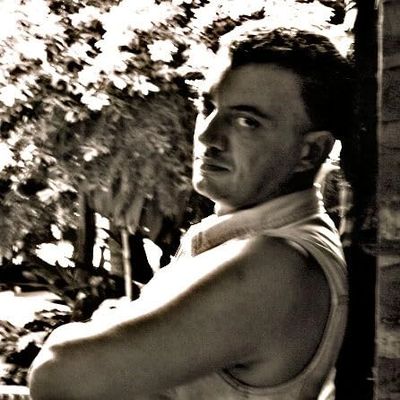
David Tocher
JP: What drew you to writing?
DT: As far back as I can remember, I loved stories and surrounded myself with books. As a child, I would tell stories by drawing illustrations for the plots I made up, then getting an adult to write the scenes beneath each picture. Sometimes it would be a teacher, sometimes my mom, a relative, or a family friend. So even as early as Grades 1 and 2, I already had stories to tell.
Then, when I was about eight years old, I discovered the books of a certain author who was very prolific and essentially dominated the horror genre in the 1980s. The covers for his books captivated me, and I began by reading his short stories. That discovery didn’t just shape my reading habits, it strengthened my desire to write.
With him as my gateway, I later studied English Literature, World Literature, and some Eastern Literature. I’m mostly autodidactic, but I have also pursued formal study, taking courses through HarvardX and other institutions. In the end, my greatest teachers have always been William Shakespeare and Charles Dickens.
JP: Your novella Moonlight Desires is an amazing retelling of the Cinderella story. Tell us how you came to attack this classic.
DT: Cinderella is such a concise representation of the Hero’s Journey (see Joseph Campbell’s The Hero’s Journey and The Hero with a Thousand Faces), and it is a “Swiss Army knife” of a story. You can retell it endlessly, each time in a way that feels fresh and relevant. The stories we are read as children quietly shape the stories we read, watch, and tell as adults.
A perfect example is Back to the Future. Teenage George McFly is the “Cinderella” figure, tormented by Principal Strickland and Biff Tannen’s gang, clear stand-ins for the wicked stepmother and stepsisters. His son from the future, Marty, becomes the “fairy godmother,” equipping George with what he needs to take Lorraine to the Enchantment Under the Sea dance. Lorraine functions as the “Prince Charming” in a gender reversal, and the dance itself is the royal ball. The time-traveling DeLorean is the chariot that will turn into a pumpkin if Marty doesn’t return to the future in time.
The Rocky films follow the same pattern. Rocky Balboa is “Cinderella,” the underdog living in the dirt and soot of Philadelphia's mean streets. Paulie serves as the wicked stepmother figure, not a villain, but an anti-hero, and Mickey (Rocky’s trainer) becomes the “fairy godmother.” Each of Rocky’s opponents functions like a dark fairy, forces of disorder that threaten the fragile stability of his world. Yes, at that point we drift into Sleeping Beauty territory, but the archetypes and motifs transfer easily across fairy tales and myths.
One of the most illuminating books on this subject is Bruno Bettelheim’s The Uses of Enchantment, in which he offers a psychoanalytical reading of fairy tales. Like most people, I remain deeply charmed by these wonder tales, and Moonlight Desires was my attempt to retell Cinderella as faithfully and imaginatively as I could, while infusing it with my own voice and perspective.
JP: Tell us about your other works.
DT: Letters from a Dead World is my collection of short stories. It has been warmly received by readers and reviewers alike, and it tends to be my most popular book. The audiobook edition is narrated by classically trained actress Daniela Acitelli, who has lent her voice to world-famous authors such as Lee Child. The legendary Gothic author Nancy Kilpatrick wrote the introduction, for which I remain deeply grateful. May she rest in peace.
Then there is Spider Seeds, which is actually connected to Moonlight Desires. It follows a reclusive female author named Madison Perth who purchases a strange spider-like plant that turns out to be very much alive and very hungry. The book pays homage to Gremlins, Trilogy of Terror, Richard Matheson’s Prey, and Stephen King’s Battleground. The audiobook is narrated by Liane Curtis, who starred as Megan in Critters 2 and Randy in Sixteen Candles. She also optioned Spider Seedsfor film, with Stephen David Brooks, co-screenwriter of Stephen King’s The Mangler, attached as screenwriter and director. Liane is also cast as the lead character, Maddy Perth, and I’m very excited to see what they bring to the screen.
There is also the prequel to Spider Seeds, titled She Who Hunts: The Tale of T’lejhánka. It tells the origin story of the spider that later attacks Maddy. The novella follows a First Nations tribe and their battle against a giant spider, aided by the animals, trees, and mountains of the forest itself. This story, too, has been optioned for film, and its narrative will be woven directly into the Spider Seeds adaptation. Elizabeth Grulke narrates the audiobook edition and delivers a phenomenal, spellbinding performance.
Princess Kipira, the magical spider from Moonlight Desires, is revealed to be the mother of the T’lejhánka and of its offspring, trapped in plant form. To fully understand the history and the connection between Moonlight Desires and Spider Seeds, readers will have to turn to my upcoming book, Spider Sister, which expands the universe and ties everything together.
You can visit davidtocher.com to learn more.
JP: What is a perfect day for you?
DT: It starts with morning coffee. Cream and sugar.
Put on some Dave Brubeck, Herbie Hancock, or the Bill Evans Trio.
Show up, clock the hours, and get the words right on the page.
Good conversation with a friend.
That’s a good day.
JP: Everybody here has a “real” life. Any plans for the future?
DT: To keep on truckin’.